

Permit required
Only a firm in the Directory of Renovation Contractors may renovate an HDB flat
The requirement covers works that need no separate HDB approval, so it is not limited to hacking or structural change.
hdb.gov.sg · read 2026-08-31
A renovation contractor Singapore homeowners can lawfully engage must appear in one public register. Contravening the rules carries a fine of up to S$5,000, and it binds you as well as the firm.
Only a firm listed in HDB’s Directory of Renovation Contractors may renovate an HDB flat, including for works that need no separate approval. The check is public and takes under a minute. Contravening the rules carries a fine of up to S$5,000 on conviction, and the liability attaches to the flat owner too.
01 PERMIT
Hacking always
needs one
All demolition and hacking of walls, partial or complete, needs HDB’s prior written approval before anything starts.
hdb.gov.sg · read 2026-08-31
02 HOURS
Mon to Fri
9am to 5pm
Restricted works only. General works such as painting and screed run Monday to Saturday until 6pm.
hdb.gov.sg · read 2026-08-31
03 DEADLINE
3 months for
a new block
From the date the permit is granted. Existing blocks get 1 month.
hdb.gov.sg · read 2026-08-31
One requirement sits above everything else. Any firm working on an HDB flat has to be listed in the Housing & Development Board’s Directory of Renovation Contractors, under the Housing and Development (Renovation Control) Rules 2006.
The requirement covers works that need no separate HDB approval, so it is not limited to hacking or structural change.
That is worth reading twice, because it is broader than people expect. It is not only hacking that is restricted. Painting a flat, laying a floor and building a wardrobe are all covered by the same requirement.
Search the firm’s name in the Directory of Renovation Contractors e-Service. It is public, it is free, and it settles the question before any money moves. Every renovation contractor in Singapore that may lawfully touch your flat is in there.
A registration proves the firm may lawfully do the work. It is not a quality mark and it is not a workmanship guarantee.
This page names none, and the reason matters. Every ranked list you will find is ordered by advertising spend, affiliate commission or editorial relationship, and none of those correlate with how your flat turns out.
Three checks separate firms in a way a list cannot: whether they are on the register, whether the quote itemises scope, and whether the payment schedule is tied to stages you can inspect. All three are things you can verify yourself in an afternoon.

There is no such status. HDB registers firms in the directory; it does not approve, endorse, vet or rank them. A site advertising itself as HDB approved is describing something the register does not issue.
The register answers one question: may this firm lawfully work in an HDB flat. It answers nothing about workmanship.
The distinction matters when something goes wrong. Registration tells you the firm was permitted to be there. It does not tell you HDB inspected the work, and it gives you no route to HDB if the workmanship disappoints you.
Published bands, each with the publisher and the date it was published. Where two sources disagree, both appear rather than an average neither of them stands behind.
| Item | Reported range |
|---|---|
| 3-room BTO | S$25k to 50k |
| 4-room BTO | S$51k to 62k |
| 5-room BTO | S$40k to 115k |
Ranges as published by each source, not averaged together. Qanvast and MoneySmart figures carry their own publication dates.
Sources interiordiary.com.sg 2026-08-31qanvast.com 2026-08-31moneysmart.sg 2026-08-31
Treat these as a sanity check on a quote, in one direction or the other. What a renovation contractor Singapore-wide will charge you still depends on a scope that does not exist yet, so these are not a price for your flat.
That is a different question with a different answer. Main contractors are registered by the Building and Construction Authority for building works, and a list of them is not a list of firms permitted to renovate your flat.
The renovation accreditation run by the Consumers Association of Singapore is a third thing again. It is voluntary, it is not a licence, and it is not what permits a firm to work in an HDB flat.

An interior design firm sells design and build together and carries the coordination. A direct contractor prices the trades and expects you to hold the decisions. The fee difference buys coordination, not better tradesmen.
Both routes end in the same place: somebody measures the flat, writes a scope and prices it. If nobody has been to the flat, whatever you are holding is a brochure.
A renovation quotation that leaves any of the following out cannot be compared to another one, because the two documents are describing different jobs.
Ask for it in writing before you shortlist. A firm that will not itemise at quotation stage will not itemise at variation stage either, and that is when it costs you.
Because no two firms scope the same job from the same brief. One assumes you are keeping the flooring, another prices removing it. One measures nine feet of carpentry, another thirteen.
Normalise the scope first and the numbers move towards each other immediately. Most of the gap that looks like a price difference is a scope difference nobody wrote down.
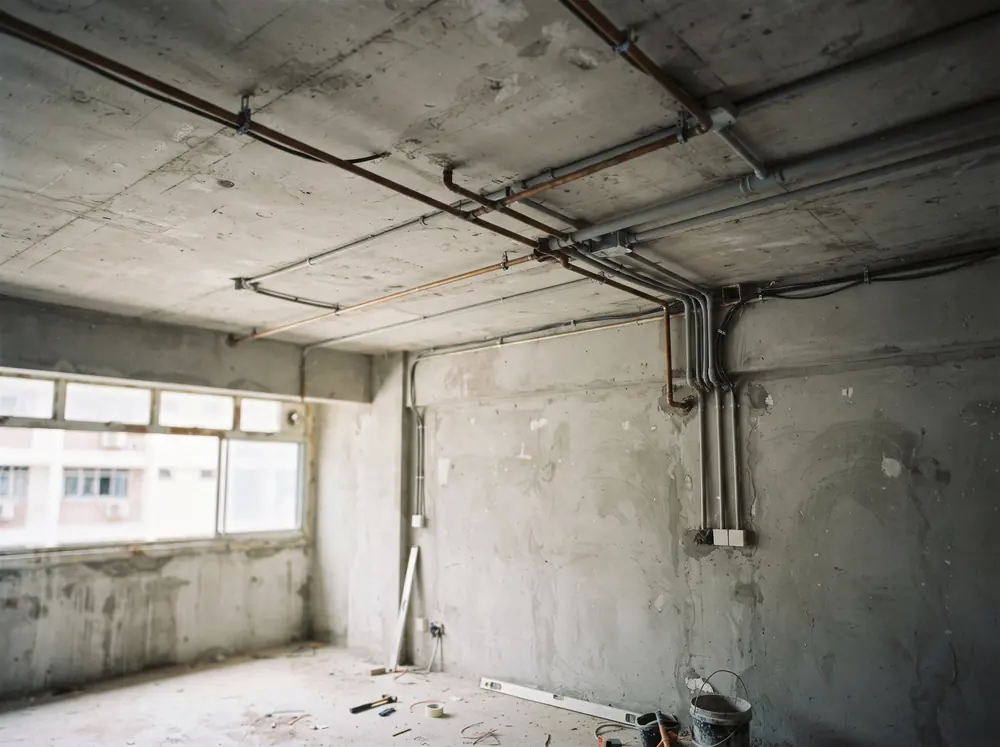
Tie every payment to a stage you can walk into and look at, never to a date in a calendar. The last one is the one that matters.
Get the split written into the contract rather than agreed over a phone call. A firm that wants most of the money before the wet works are done is telling you something about its cash position, and that is a risk you would be funding.
Tell us the flat type and when you collect keys. You get a scope discussion and an indicative cost band within one working day.
or email hello@btorenovation.sg
The HDB renovation permit is filed by the contractor before anything starts, not by you. Approved works must finish within three months in a newly completed block and one month in an existing one, counted from the day it is granted.
Three months in a newly completed block, one month in an existing one, counted from the date the permit is granted rather than the date work starts.
Ask to see the permit once it is granted, and check the dates on it against the schedule you were given. A schedule that runs past the window is not a schedule, it is a plan to ask for an extension nobody has agreed to yet.
Two classes of work, two different windows. General renovation works run Monday to Saturday, 9am to 6pm. Restricted renovation works, meaning demolition, removing finishes and cutting tiles, run Monday to Friday, 9am to 5pm only.
Sources MyNiceHome by HDB 2026-08-31
Restricted works are additionally banned on five named festival eves. A contractor who plans the noisy work without that constraint has already lost days from the schedule.
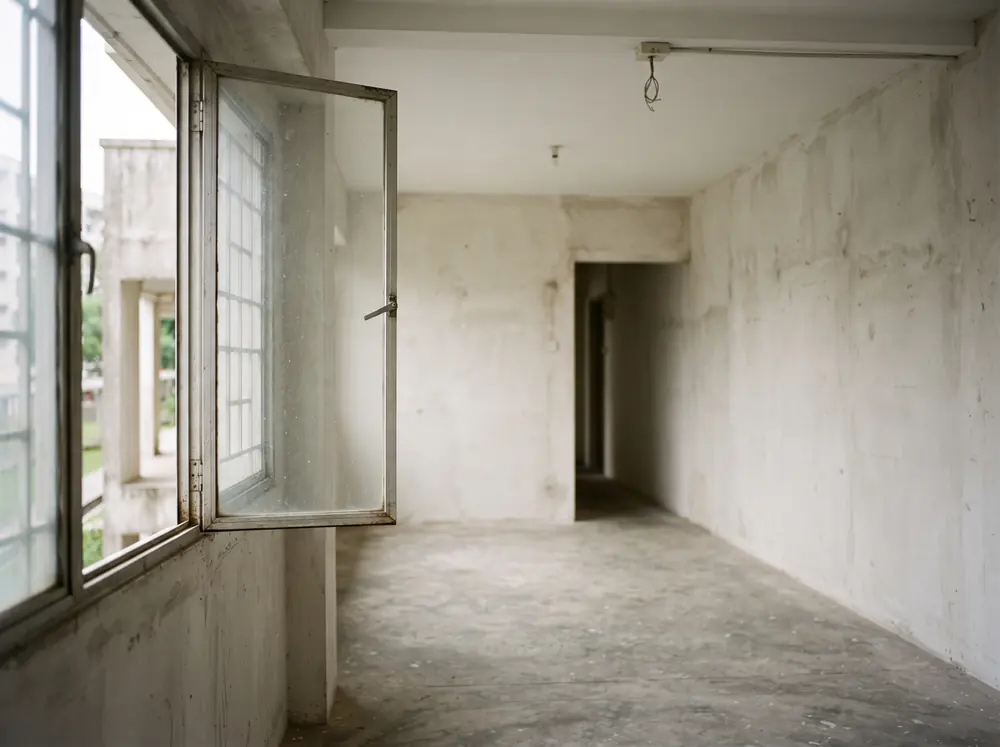
Structural walls, beams and columns. There is no approval route, no engineer’s letter and no budget that changes it. Non-structural walls can go with written approval obtained first.
Demolition of a permitted non-structural wall still needs written approval before work begins.
If a firm offers to remove something and cannot tell you which category it falls into, that is the answer to your question about the firm. The classification is knowable before any quote is written, and a competent contractor knows it from the floor plan.
Electrical work has to be done by a worker holding the relevant Energy Market Authority licence, which is separate from the firm’s own registration. Ask which named worker holds it.
The licence sits with the worker, not with the renovation contractor's DRC registration.
Plumbing has its own competence requirements for work that touches the common supply. Neither is something you should discover on the day. Ask at quotation stage who is doing the services and under what authority.
Eight work packages. Naming them is the only reliable way to tell whether two firms are quoting the same job.
We walk the flat after key collection, measure every run, and write down what you want changed and what HDB will let you change.
Your contractor files the electronic application. Wall demolition needs the flat’s floor plan submitted with it.
Demolition, tiling and anything touching the bathroom happen first, inside the restricted-hours window.
Kitchen and wardrobe carpentry is fabricated to a fixed specification, then installed, then painted.
Ask for the quote to follow this order, package by package. When two firms present the same eight headings you can compare them line by line, and the conversation stops being about totals and starts being about scope.

Carpentry is normally the largest single line and it is priced per foot run, so run length drives the number more than the rate does. Two quotes at the same rate can differ by thousands.
The hidden variable is the carcass behind the laminate. Ask what it is and get the answer in writing, because a lower rate on a worse carcass is the more expensive decision by year three.
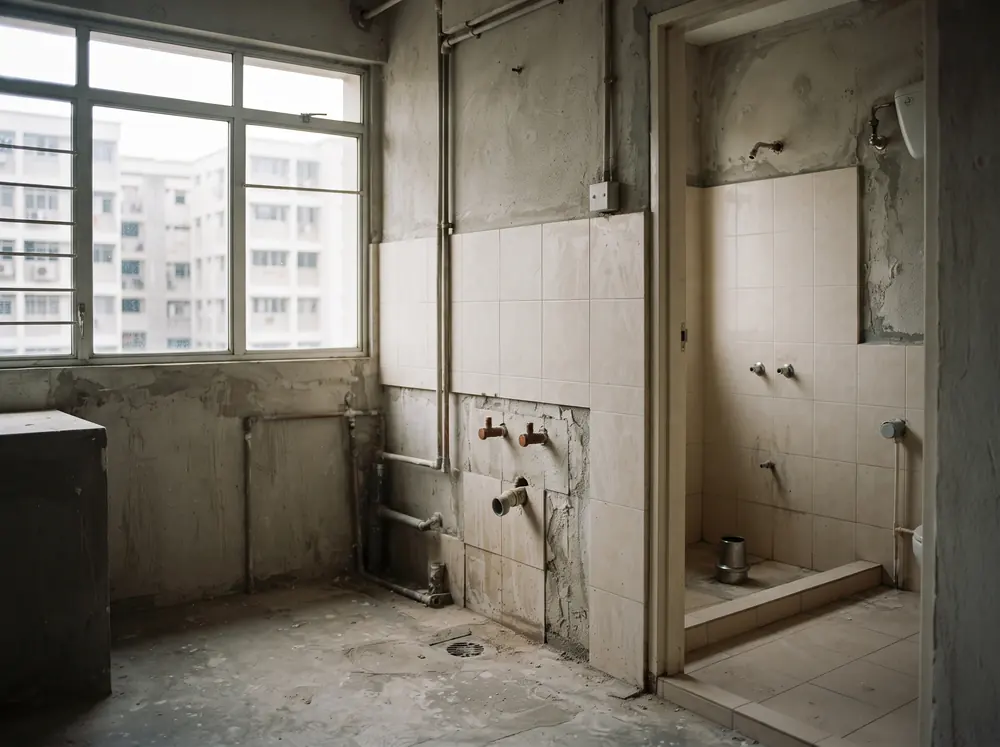
Waterproofing sits under the screed. Breaking the membrane changes the basis of a bathroom job rather than adding a line to it, and moving a plumbing point costs more than the cabinet above it.
New flats also carry a three-year restriction on bathroom floor finishes, so the room you most want to change has the least freedom in the early years.

Each stage blocks the next. Two of them are routinely run out of order, and both cost money to undo.
Sequence is also how you read a programme honestly. If carpentry is scheduled before the site measure, or painting before the defects walk, the programme was written to look short rather than to be delivered.
Site conditions found after hacking are nobody’s fault and belong in a contingency. Carpentry ordered before the site measure is the firm’s fault. Scope you never described is yours.
Agreeing that split in advance is worth more than any warranty clause, because it decides who pays for the surprise rather than who argues about it.
Tell us the flat type and when you collect keys. You get a scope discussion and an indicative cost band within one working day.
or email hello@btorenovation.sg
A defects liability period runs from handover and is not the same thing as a workmanship warranty. Get both in writing, with what each covers and for how long.
Re-plastering and re-finishing a cut surface takes materials and labour. If it is not a named line, it was not priced.
Put the defects walk in the contract as a named step with a date, and keep the list in writing. Verbal snagging is how small defects become disputes, and it is also how the final balance gets released before the work is actually finished.
Neighbours within two units must get written notice at least five days before works begin, and the Notice of Renovation stays displayed outside the flat throughout.
That is the contractor’s job to arrange and your name on the flat. A firm that treats the notice as optional will treat the hours as optional too.
A renovation loan funds the contract, and the shape of the spend is what matters: the money lands inside a short permit window rather than across a year.
This site names no bank. Size the borrowing against an itemised quote and a named contingency, not against a headline package price.
None exist for this site, so none appear on it. A fabricated review would also be a false representation under the Consumer Protection (Fair Trading) Act, which is a second and independent reason not to invent one.
Every interior image here is a generated illustration and says so in its caption. These are the checks we are telling you to run on any firm, and that includes BTO Renovation SG.
Every figure here names its publisher and the date it was read, and every rule links to the HDB page behind it. Claims we cannot source are absent, not softened.
Regulatory claims cite HDB directly, with the date the page was read. Cost figures name their publisher and their publication date.
Where two publishers disagree, both figures appear. How we source and check our figures sets out the method in full, including what we do when a source goes stale.
Tell us which BTO project, which flat type and when you collect keys. You get a reply within one working day with a scope discussion and an indicative cost band.
Checked against primary sources · updated 2026-09-01